
When you need circuit boards made, the first question that lands on your desk is often about quantity. A low volume PCB quote looks very different from a high-volume pricing sheet, and understanding that difference can save you thousands of dollars and weeks of waiting. Whether you are prototyping a new product, running a pilot batch for market testing, or scaling up for full production, the way you buy PCBs fundamentally changes as your order size grows.
The global electronics industry has been shifting toward high-mix, low-volume (HMLV) production as startups and product developers seek prototyping and small-batch manufacturing options. At the same time, established manufacturers continue to optimize for scale. Knowing which pricing model applies to your situation starts with understanding how each side works.
What Counts as Low Volume PCB Production
Low-volume PCB production typically covers orders ranging from 25 to 5,000 units. This range is designed for prototyping, concept validation, pilot runs, product revisions, and hobbyist projects. Manufacturers like OurPCB explicitly advertise a no-minimum-order-quantity policy, meaning you can order as few boards as you need without being forced into a larger batch.
In contrast, high-volume production begins where low volume ends — typically above 5,000 units and often reaching tens or hundreds of thousands. The manufacturing processes are the same at their core, but the economics, lead times, and quoting structures diverge significantly.
Why Low Volume Matters for Product Development
Low-volume runs let you validate a design before committing capital to full-scale production. Prototyping services are built around testing and validation, giving you the chance to catch errors when they are cheapest to fix. Quick-turn assembly helps electronics designers actualize ideas faster and gain market share before competitors.
Common challenges in the low-volume space include bill-of-materials bottlenecks (shortages or price fluctuations that hit mid-order), design-for-manufacturing blind spots that can lead to full board re-spins, and manual quote delays that slow down development cycles. Waiting two or more days for pricing is increasingly seen as a competitive disadvantage in the current PCB sourcing environment.
Pricing Structure Comparison
The most visible difference between a low volume PCB quote and high-volume pricing lies in how costs are distributed.
Low Volume PCB Pricing
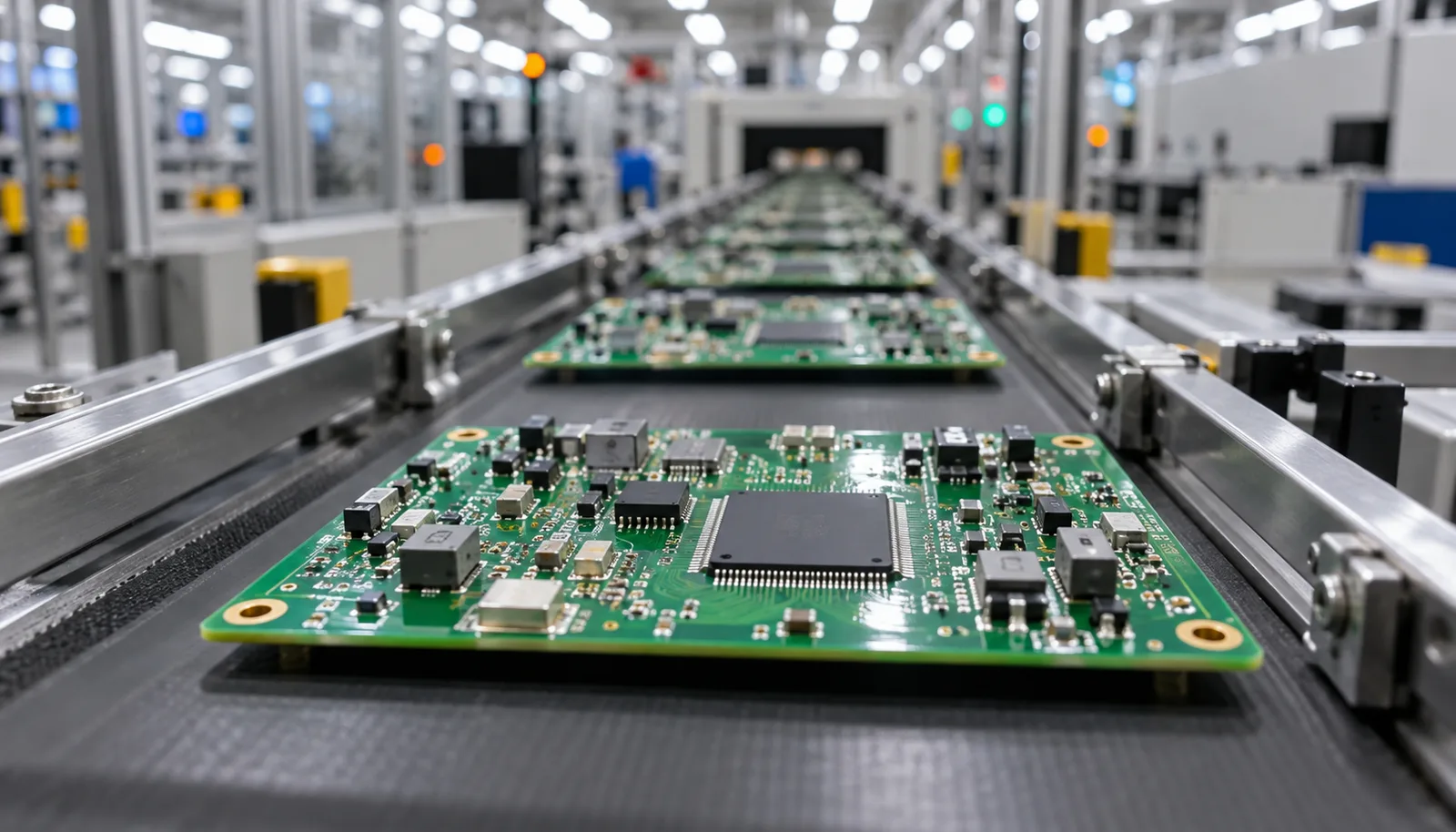
Low-volume pricing is dominated by setup fees and non-recurring engineering (NRE) charges. Because these one-time costs cannot be spread across many units, they make up a much larger share of the per-board price. For a typical low-volume order, you might see:
-
A flat setup fee around $50.00 for custom board runs
-
Assembly costs ranging from $0.02 to $0.05 per square inch
-
Dual-layer board pricing around $0.15 per square inch
-
NRE charges for engineering review, stencil creation, and test fixture development
These numbers mean that ordering 50 boards costs significantly more per unit than ordering 5,000 boards, even though the absolute dollar amount is lower.
High Volume Pricing
High-volume pricing flips the equation. Setup and NRE costs are amortized across thousands or tens of thousands of units, so per-board costs drop substantially. The pricing structure shifts toward raw material costs, component procurement efficiency, and automated assembly throughput. High-volume orders benefit from economies of scale in component sourcing through authorized distributors such as Avnet, Arrow, and Future Electronics.
The trade-off is that high-volume runs require longer lead times for component procurement and production scheduling. You also carry more financial risk — if a design flaw is discovered after 10,000 boards are made, the cost of revision is multiplied.
Minimum Order Quantity Policies
Minimum order quantity (MOQ) is one of the sharpest dividing lines between low-volume and high-volume providers. A no-MOQ policy is increasingly expected as standard in the current industry landscape, and it is a core feature of low-volume-friendly manufacturers.
Low-volume providers typically offer no MOQ or a very low MOQ — sometimes as few as 25 units. This flexibility allows you to order exactly what you need for a prototype run, a beta test, or a limited product launch without paying for boards you do not yet need.
High-volume providers, by contrast, often set MOQs at 5,000 units or higher. Their production lines are optimized for long, uninterrupted runs, and stopping to change over for a small batch disrupts efficiency. If you approach a high-volume-only manufacturer with a low-volume request, you will either be turned away or quoted a price that effectively discourages the order.
Turnaround Time Differences
Speed is another area where low-volume and high-volume quotes diverge.
Low Volume Turnaround
Low-volume production is built for speed. Quick-turn capabilities allow manufacturing and assembly within 24 hours to seven days. For boards with 1 to 12 layers, turnaround is typically within 72 hours. Boards with 12 or more layers can be completed within 120 hours.
Industry benchmarks for a typical low-volume order break down as follows:
-
Engineering review and DFM check: 1 working day
-
PCB fabrication: 3 to 5 working days
-
SMT assembly: 1 to 3 working days
-
Inspection and testing: 1 working day
Top manufacturers report on-time shipping rates of 97 percent and delivery-to-specification rates of 98 percent for these quick-turn orders.
High Volume Turnaround
High-volume production is scheduled in batches. Lead times are longer — often two to four weeks or more — because the manufacturer needs to procure components in bulk, set up dedicated production lines, and run extensive quality assurance protocols. The per-unit time is lower, but the total calendar time from order to shipment is usually greater.
Cost Drivers Unique to Low Volume
Several cost factors hit low-volume orders harder than high-volume ones.
Design complexity and labor are primary variables in any quote. A complex 12-layer board with blind and buried vias requires more engineering review time than a simple 2-layer design, and that review time is a larger percentage of the total cost on a small run.
Specialized materials such as Rogers, ceramic, heavy copper, and IMS substrates significantly increase unit costs in low volumes because material vendors sell in minimum quantities that exceed what a small run needs.
Full turnkey versus consigned assembly also affects pricing. Turnkey service means the manufacturer sources all components, which adds procurement overhead. Consigned assembly means you supply the parts, which can reduce cost but adds logistics complexity.
Documentation and the Quoting Process
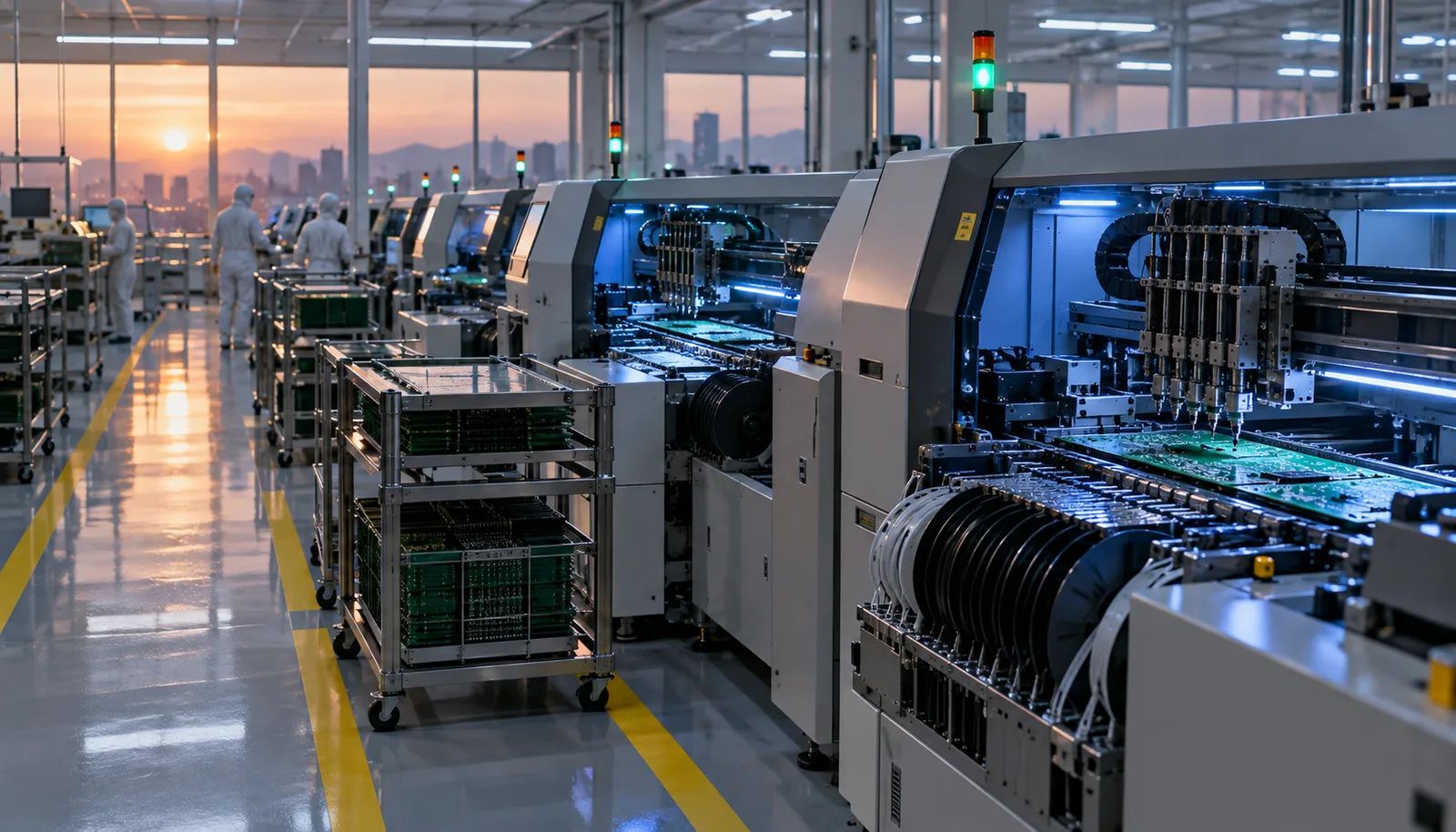
Getting an accurate low volume PCB quote requires the same documentation as a high-volume order, but the stakes are different. Missing or incomplete files can delay a low-volume quote by days, which is a much larger proportion of your overall timeline.
To get a quote and move to production, you need:
-
Gerber files for PCB layer fabrication
-
Bill of materials with complete part numbers and manufacturers
-
Centroid files for component placement coordinates
-
Pick-and-place files for SMT machine programming
-
NC drill files for drilling coordinates
Low-volume providers typically offer instant online quotation systems with drag-and-drop file upload. After submission, an engineering team performs design-for-manufacturing (DFM) and design-for-assembly (DFA) checks. These reviews examine footprint design, component placement, solder mask clearances, and panelization.
Skipping DFM is a costly mistake for low-volume runs. If a design issue is caught after production, the entire batch may need to be scrapped, and setup fees must be paid again for the revision. High-volume runs face the same risk, but the absolute cost of a re-spin is much higher.
The IPC standards organization publishes guidelines such as IPC-2152 for trace current capacity and IPC-6012D for acceptance criteria, including microvia void tolerances. Referencing these standards during the quoting process helps ensure your design is manufacturable from the start.
Quality Assurance Across Volume Tiers
Quality assurance protocols are similar regardless of order size, but the approach differs. Low-volume runs often receive more manual inspection attention because automated lines are not fully engaged for small batches.
Standard testing protocols include:
-
Automated optical inspection for surface defects
-
X-ray inspection for hidden internal defects
-
In-circuit testing using spring-loaded pins for connectivity
-
Flying probe testing with precision mobile probes
-
Burn-in testing under extreme stress conditions
-
Functional testing under simulated real-world operation
Certifications such as ISO 9001 and UL certification apply across all volume tiers. Manufacturers that hold these certifications apply the same quality management systems to a 50-board prototype run as they do to a 50,000-board production run.
When to Choose Low Volume vs High Volume
The decision between low-volume and high-volume is not always about the final production quantity. Many companies use a hybrid approach.
Choose low volume when:
-
You are prototyping a new design and need to validate functionality
-
You are running a pilot batch for market testing before full production
-
You need boards quickly — within days rather than weeks
-
Your design is still evolving and may require revision
-
Your total quantity is under 5,000 units
-
You want to minimize upfront financial commitment
Choose high volume when:
-
Your design is finalized and field-tested
-
You have confirmed market demand
-
You need the lowest possible per-unit cost
-
You can commit to a larger upfront investment
-
Your lead time requirements are flexible
The hybrid approach uses low-volume runs for initial market testing, then scales to high-volume production once the design and demand are proven. This strategy minimizes risk while still capturing economies of scale when they matter most.
Recommendation
For most product development cycles, starting with a low volume PCB quote is the smarter move. It gives you speed, flexibility, and financial protection while your design is still being refined. The no-MOQ policies and quick-turn capabilities available today mean you are not sacrificing quality or service for the sake of a small order.
When you are ready to scale, the transition to high-volume pricing will be smoother because your design has already been validated in production. The DFM feedback you received during your low-volume run will have already resolved manufacturing issues, and your component sourcing will be established.
If you are starting a new project or preparing for a revision, request a low volume PCB quote from a manufacturer that offers instant online pricing, integrated DFM support, and a dedicated technical team. The right quote process will save you time, money, and the headache of discovering problems after your boards are built.